
BRITISH RAIL HOLIDAY PLANFILE 0004
Lake District Without a Car: Rail Holiday Planning
Independent route planning for walkers and mixed-ability groups who prefer fewer hotel changes: 4–8 days, one-base and outdoors. Planning from £265; tickets and travel purchases remain yours.
← Back to all plans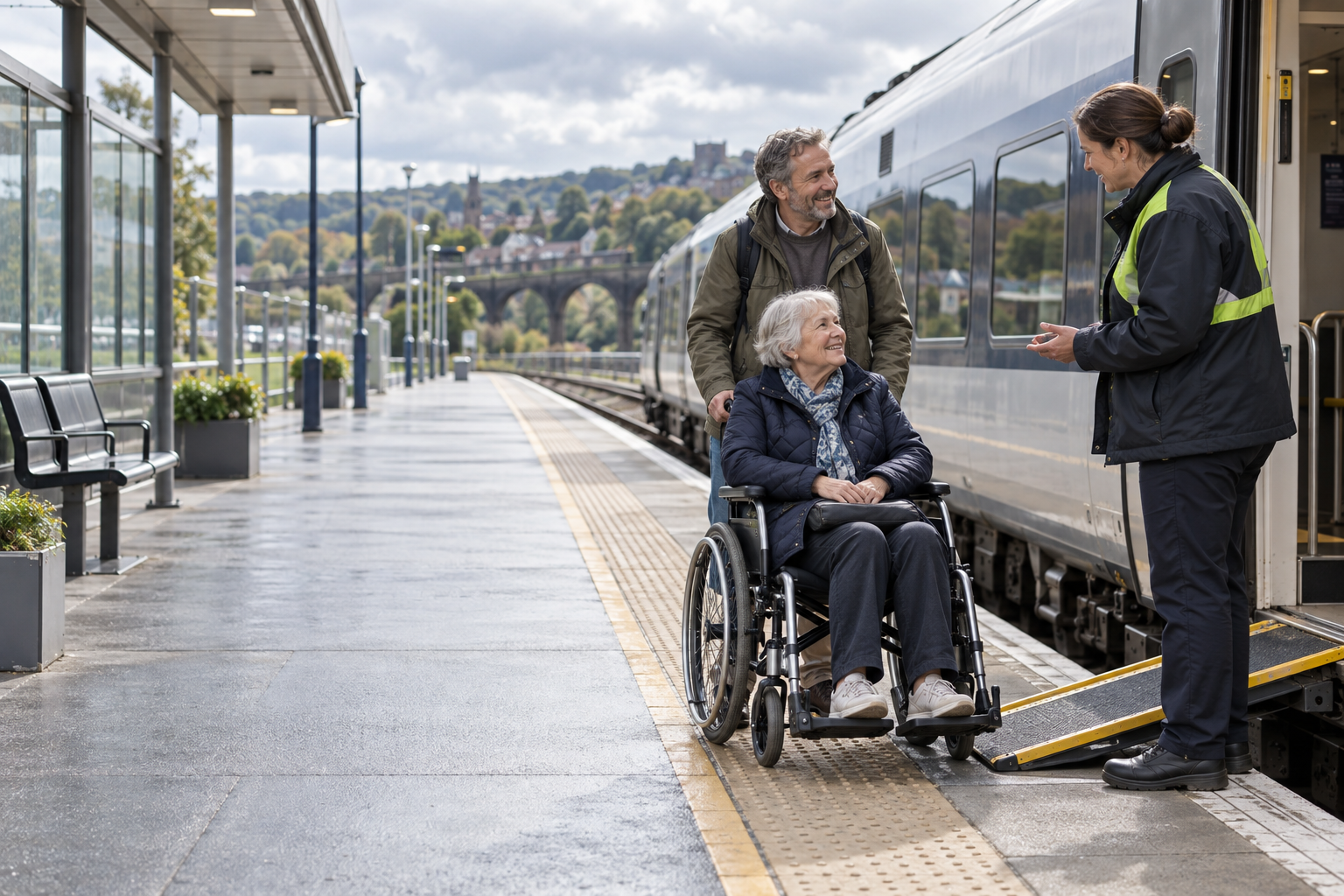
Read the rail holiday as a chain of handoffs
The route family is Oxenholme or Windermere → one lake base → rail return. A timetable covers trains, but the holiday also uses pavements, concourses, platforms, lifts, buses, ferries, taxis and accommodation doors. Draw that complete chain before comparing journey times. Write exact stations where a town has more than one, flag terminal transfers, and include the period between checkout and check-in. Map estimates are useful discovery, not proof of walking effort. Crowds, stairs, weather and unfamiliar entrances change the same distance. A stop earns its place when it improves the experience more than it adds physical and operational friction. This geographic edit usually removes repeated travel without making the trip feel smaller.
Source before certaintyConnection before collectionDesign for the travelling party, not an average passenger
Ask who carries each bag, who manages tickets, who needs predictable meals, how far everyone can walk and whether the group can split briefly. A couple, family, solo traveller and multigenerational party can take the same train yet need different allowances. For walkers and mixed-ability groups who prefer fewer hotel changes, exact practical needs matter more than broad labels such as accessible or family-friendly. Record the condition that changes the route: step-free travel, a seat interval, low sensory load, a toilet need or another constraint. Diagnosis and medical records are not required. Turning needs into short operational questions helps the responsible operator, station or hotel give a useful answer and exposes assumptions before payment.
Source before certaintyConnection before collectionBuild a personal connection buffer
Published minimum connection time is an operational reference, not a personal target. Add the time needed to alight, orient, reach a lift or stairs, cross platforms, manage luggage and complete any assistance handoff. Then consider the consequence of missing the onward service. A short change may be reasonable where trains are frequent and no scarce booking is at risk; the same number can be poor before a ferry, sleeper or final rural bus. Write the reason beside each allowance. Protect arrival days from fragile timed bookings and give every full day one main anchor, one nearby optional branch and a clear exit. Time should defend the holiday's purpose, not merely make a spreadsheet efficient.
Source before certaintyConnection before collectionPlan the station and the last mile
The main friction is bus connections, seasonal crowds and wet-weather alternatives. Examine street-to-platform and platform-to-room movement, not only the scheduled rail leg. Where official station information exists, retain the source and observation date. Where a lift, boarding ramp, walking distance or interchange route matters, ask the provider directly and recheck close to travel. Passenger assistance can support a journey, but it does not automatically verify the street, local bus, taxi or hotel at the other end. A central accommodation label can still hide a hill, kerb or second local change. Choose a base from the journeys the traveller will repeat, including arrival with bags, evening return and departure, rather than from a destination pin alone.
Source before certaintyConnection before collectionSeparate official fact, observation, judgement and unknown
The evidence standard is dated official rail, station, assistance, ferry, bus and accommodation sources. Operational claims should lead to the organisation responsible for them: National Rail, a train operator, station, government service, ferry, attraction or accommodation provider. Reviews and independent maps can reveal questions, but they should not become final authority for a changing condition. Record what the source supports and when it was read. A bare link is not a verification trail. If official pages conflict, ask the responsible provider or redesign around the uncertainty instead of silently choosing the convenient answer. This hierarchy is especially important for engineering work, ticket restrictions, assistance, lifts, seasonal services and any fact that could strand a traveller.
Source before certaintyConnection before collectionSecure the route-shaping decision first
Booking order follows consequence rather than habit. Identify the element that would force the route to change if unavailable: a limited room type, sleeper, ferry, event, heritage service or fixed departure. Protect it first, then add flexible components around it. Ticket labels do not replace current terms. Before payment, check names, date, time, exact stations, permitted route, class, discount eligibility, refund conditions and whether a seat reservation is included. Save the confirmation and provider contact. Good Connection does not hold inventory or make third-party purchases. The traveller remains the customer of every railway, hotel and activity provider, which keeps the planning fee visible and each contract easier to audit.
Source before certaintyConnection before collectionMake accessibility checks a named chain
Accessibility is not a single tick. Translate the traveller's requirement into observable questions: Is the route step-free on the date? Which entrance reaches the correct platform? Is assistance available for that service? How far is the connection and where is seating? Does the hotel approach include a steep gradient or uncontrolled crossing? One verified link does not verify the next. Assign every question to the operator or property able to answer it, retain the reply and recheck volatile details. The same discipline improves trips for older travellers, families, people managing fatigue and anyone with heavy luggage. The plan can organise verification; it cannot certify facilities, replace medical advice or override live safety instructions.
Source before certaintyConnection before collectionCount luggage as time, effort and responsibility
Bags affect walking speed, lift choice, boarding, seating, local transport and whether a day visit remains enjoyable. Count who can move each item without assumed help and what happens if a lift is unavailable. Avoid designing a long attraction day with luggage unless current storage is confirmed; hotel storage can have capacity, hours or conditions. A multi-base route often improves when one stay is removed or a direct station base is chosen for a transition night. This is not minimalist packing as a moral rule. It is connection design. Hands may need to remain available for children, mobility aids or navigation, and every extra checkout adds another point where possessions, energy and timing must align.
Source before certaintyConnection before collectionPrepare one credible fallback and its trigger
A recoverable holiday does not need three parallel itineraries. Give each fragile day one alternative that preserves its purpose and remains geographically plausible. Write the trigger: planned cancellation, inaccessible replacement transport, missed final connection, unsafe weather or a fatigue threshold. State the first official source to check and the provider controlling the booked service. If the route depends on one thin link, consider an earlier departure, a night near the gateway or a different order before booking. During disruption, live railway and emergency instructions take priority over the static plan. Good Connection supplies decision structure, not network monitoring, compensation advice, reaccommodation or a round-the-clock emergency line.
Source before certaintyConnection before collectionCompare the whole decision, not one attractive fare
For a commissioned service, planning begins at £265; rail, accommodation, meals, admission and other travel purchases remain separate. The useful budget divides intercity travel, local movement, lodging with taxes, food, activities, storage, transfers and a contingency. A cheaper room can cost more after repeated taxis. A flexible ticket may protect an expensive night. One fewer base may improve price and experience. Research-time figures are dated context rather than quotations, and pass or railcard comparisons require current eligibility plus the exact planned journeys. At checkout, replace estimates with live totals and record cancellation deadlines. The traveller should see what extra cost removes, what it protects and which risk remains.
Source before certaintyConnection before collectionTurn the research into one visible decision record
Finish with a one-page record for a 4–8 days, one-base and outdoors route shaped as Oxenholme or Windermere → one lake base → rail return. State the route, traveller-specific connection allowance, scarce booking, most important provider question, fallback and next recheck date. Remove any stop that contributes less than the fragility it creates. Keep official links beside the decisions they support. If an unknown materially affects safety, access or the ability to complete the journey, resolve it with the responsible provider before payment or choose a route that does not depend on it. The strongest outcome is not false certainty. It is a North West England rail holiday whose connections remain usable with bus connections, seasonal crowds and wet-weather alternatives, with each assumption visible enough to challenge and each next action clear enough for the traveller to complete without opening another maze of tabs.
Source before certaintyConnection before collectionOpen the current provider page. Check the traveller, date, station, restriction and exact thing being reserved.
Good Connection supplies itinerary research and route judgement. We do not control rail operations, hold inventory, certify facilities or replace live safety and disruption instructions.
Read the full verification standard ↗